
Cossec Group
The Dynamics of Biological Identities laboratory is broadly interested in understanding how cells acquire, maintain, and change their identity during development and in disease. A central focus of our research is cellular plasticity (the ability of cells to transition between distinct functional states) and how this flexibility is controlled by epigenetic mechanisms. By integrating molecular, cellular, and systems-level approaches, we aim to decipher how epigenetic regulation shapes cell fate decisions in physiological contexts such as embryonic development, as well as in pathological conditions including cancer, genetic disorders, and inflammation.

A key regulator of cellular homeostasis is SUMOylation, a reversible post-translational modification in which Small Ubiquitin-like Modifier (SUMO) proteins are covalently conjugated to target proteins, many of which are associated with chromatin. Rather than promoting protein degradation, SUMOylation acts as a dynamic regulatory switch that modulates protein–protein interactions, chromatin organization, transcriptional activity, subcellular localization, and stress responses. Through these functions, SUMOylation plays a central role in maintaining genome function and cell fate identity.
Our work is organized around three complementary axes.
First, we investigate SUMOylation as a universal regulator of cell identity and cell fate transitions. We have found that a reduction in global SUMOylation levels facilitates cell state transitions, suggesting that SUMO acts as a chromatin-associated “guardian” of cellular identity. In mouse embryonic stem cells, inducing waves of hypo-SUMOylation generates increased cellular diversity and promotes self-organization, enabling the formation of embryo-like structures in vitro. These findings position SUMOylation as a key constraint on developmental plasticity and a fundamental regulator of identity stability. Our current aim is to dissect the dynamics of SUMOylation in murine development and in diseases associated with cell fate changes, such as cancer.

Second, we explore the role of SUMOylation in inflammatory gene regulation, with a focus on innate immune signaling and IFN-β (IFNB1) expression. We have shown that decreasing SUMOylation leads to a dramatic increase in IFNB1 levels, driven by the activation of a distal regulatory enhancer located approximately 100 kb downstream of the gene. This highlights SUMOylation as a critical repressive layer controlling enhancer activity and inflammatory gene expression programs, thereby fine-tuning innate immune responses. Our current aim is to investigate the chromatin architecture regulated by SUMOylation in the control of IFNB1 expression, as well as its pathological alterations in interferon signaling, such as in human autoimmune diseases.

Third, we study how SUMOylation regulates totipotency and pluripotency transitions during early embryonic development, using embryonic stem cells and 2-cell-like cell (2CLC) models. We find that reduced SUMOylation facilitates the conversion toward 2CLC states and is associated with major changes in nuclear architecture. In this context, we have identified a repressive nuclear organization feature termed the Z-compartment, which emerges specifically in spontaneous totipotent-like cells. This compartment is distinct from the classical A/B nuclear compartmentalization and represents an additional layer of genome organization associated with this cell state. The Z-compartment is characterized by a global reduction in expression of specific developmental genes. Importantly, we have shown that ZSCAN4 is essential for the establishment and maintenance of this repressive compartment, highlighting its role in shaping the genomic architecture of totipotent-like cells. Our current aim is to dissect the mechanisms associated with the formation of this new Z-compartment and to determine whether it can be identified in vivo.

Together, these three axes converge on a unified framework in which SUMOylation acts as a central epigenetic regulator of cellular identity, inflammation, and developmental plasticity, coordinating genome organization and transcriptional programs across physiological and pathological contexts.
Our experimental approaches include multi-omics strategies (such as scRNA-seq, ATAC-seq, ChIP-seq, and Hi-C), the use of gastruloids and embryo-like structures, advanced imaging techniques (including immunofluorescence and DNA FISH), as well as functional screening approaches such as perturbation screens.
Publications
Shajahan, S. et al. Z-DNA formation regulates the totipotent-like state and primes Zscan4-dependent chromatin compartmentalization. Nat. Struct. Mol. Biol. https://doi.org/10.1038/s41594-026-01751-5 (2026) doi:10.1038/s41594-026-01751-5.
Vertti-Quintero, N. et al. Culture of pluripotent stem cells in microscale droplets modulates differentiation and tissue patterning towards organoids on chip. Stem Cell Res. Ther. 16, 510 (2025).
Goffeney, A. et al. SUMO operates from a unique long tandem repeat to keep innate immunity in check. Nucleic Acids Res. 53, gkaf750 (2025).
Mata-Garrido, J. et al. Transient pharmacological inhibition of SUMOylation during pregnancy induces craniofacial malformations in offspring mice. Eur. J. Cell Biol. 104, 151480 (2025).
Traboulsi, T., et al. (2023). Generation of embryo-like structures from mouse embryonic stem cells treated with a chemical inhibitor of SUMOylation and cultured in microdroplets. STAR Protocols 4, 102573. 10.1016/j.xpro.2023.102573. #Corresponding author
Cossec, J.-C., et al. (2023). Transient suppression of SUMOylation in embryonic stem cells generates embryo-like structures. Cell Rep 42, 112380. 10.1016/j.celrep.2023.112380. *Co-first authors, #Co-corresponding authors
Theurillat, I., et al. (2020). Extensive SUMO Modification of Repressive Chromatin Factors Distinguishes Pluripotent from Somatic Cells. Cell Rep 32, 108146. 10.1016/j.celrep.2020.108146. *Co-first authors
Botté, A., et al. (2020). Ultrastructural and dynamic studies of the endosomal compartment in Down syndrome. acta neuropathol commun 8, 89. 10.1186/s40478-020-00956-z.
Cossec, J.-C., et al. (2018). SUMO Safeguards Somatic and Pluripotent Cell Identities by Enforcing Distinct Chromatin States. Cell Stem Cell 23, 742-757.e8. 10.1016/j.stem.2018.10.001.
Decque, A., et al. (2016). Sumoylation coordinates the repression of inflammatory and anti-viral gene-expression programs during innate sensing. Nat Immunol 17, 140–149. 10.1038/ni.3342.
Corlier, F., et al. (2015). Modifications of the endosomal compartment in peripheral blood mononuclear cells and fibroblasts from Alzheimer’s disease patients. Transl Psychiatry 5, e595. 10.1038/tp.2015.87.
Neyret-Kahn, H., et al. (2013). Sumoylation at chromatin governs coordinated repression of a transcriptional program essential for cell growth and proliferation. Genome Res 23, 1563–1579. 10.1101/gr.154872.113.
Cossec, J.-C.*, et al. (2012). Trisomy for synaptojanin1 in Down syndrome is functionally linked to the enlargement of early endosomes. Hum Mol Genet 21, 3156–3172. 10.1093/hmg/dds142. *Co-first authors
Devauges, V., et al. (2012). Homodimerization of amyloid precursor protein at the plasma membrane: a homoFRET study by time-resolved fluorescence anisotropy imaging. PLoS One 7, e44434. 10.1371/journal.pone.0044434.
Marquer, C., et al. (2011). Local cholesterol increase triggers amyloid precursor protein-Bace1 clustering in lipid rafts and rapid endocytosis. FASEB J 25, 1295–1305. 10.1096/fj.10-168633.
Panchal, M., et al. (2010). Enrichment of cholesterol in microdissected Alzheimer’s disease senile plaques as assessed by mass spectrometry. J Lipid Res 51, 598–605. 10.1194/jlr.M001859.
Cossec, J.-C., et al. (2010). Clathrin-dependent APP endocytosis and Abeta secretion are highly sensitive to the level of plasma membrane cholesterol. Biochim Biophys Acta 1801, 846–852. 10.1016/j.bbalip.2010.05.010.
Blandin, P., et al. (2009). Time-gated total internal reflection fluorescence microscopy with a supercontinuum excitation source. Appl Opt 48, 553–559. 10.1364/ao.48.000553.
Senée, V., et al. (2006). Mutations in GLIS3 are responsible for a rare syndrome with neonatal diabetes mellitus and congenital hypothyroidism. Nat Genet 38, 682–687. 10.1038/ng1802.
Review
Cossec, J.-C., et al. (2010). Cholesterol changes in Alzheimer’s disease: methods of analysis and impact on the formation of enlarged endosomes. Biochim Biophys Acta 1801, 839–845. 10.1016/j.bbalip.2010.03.010.
Patent
Baroud, C., Cossec, J.-C., Dejean, A., Sart, S., Traboulsi, T., (2023). ln vitro generation of organized 3D cell structures including head-trunk embryo-like structures, using epigenetic remodeling factors – Microfluidic platform suitable for their generation. Patent application WO 2023/002057 A2. All inventors are awarded equal rights.
Members





Contact
Jack Cossec
jcossec@pasteur.fr
Dynamics of Biological Identities
Epigenetic & Cell Fate Unit (EDC UMR7216)
Lamarck Building B, 4th floor (438)
35 rue Hélène Brion
75205 Paris Cedex 13
À lire aussi
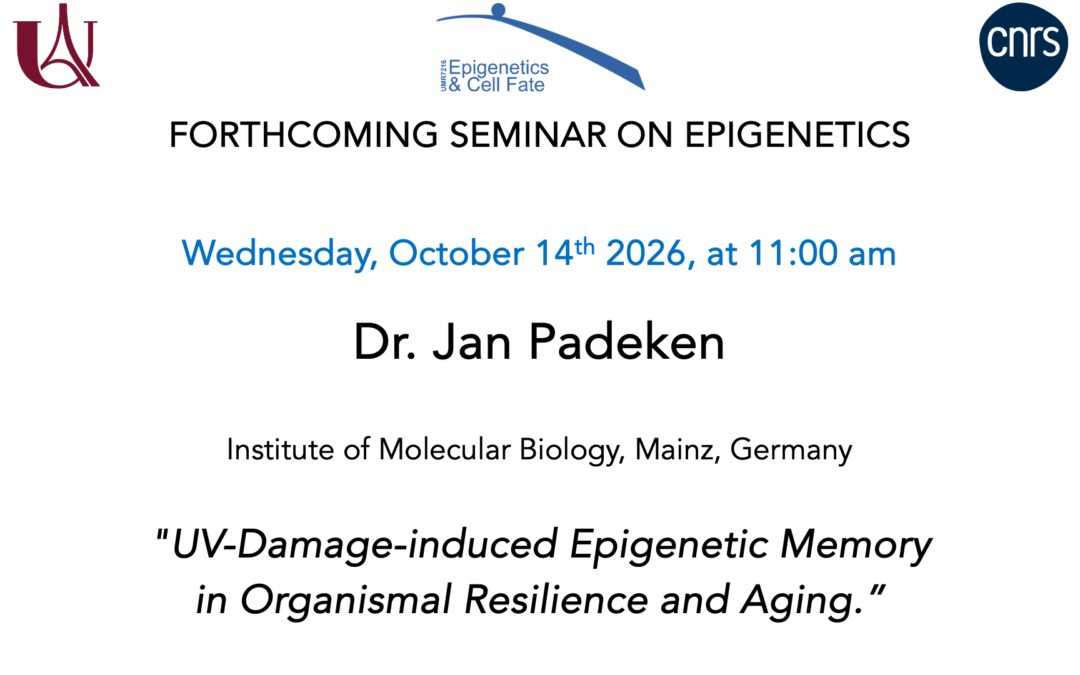
Seminar Jan Padeken –October 14, 2026
Dr. Jan Padeken Institute of Molecular Biology, Mainz, Germany "UV-Damage-induced Epigenetic Memory in Organismal Resilience and Aging." The seminar will take place in the Institut Jacques Monod seminar room (RB-18B).Bâtiment Buffon, 15 rue Hélène Brion, Paris 13th....
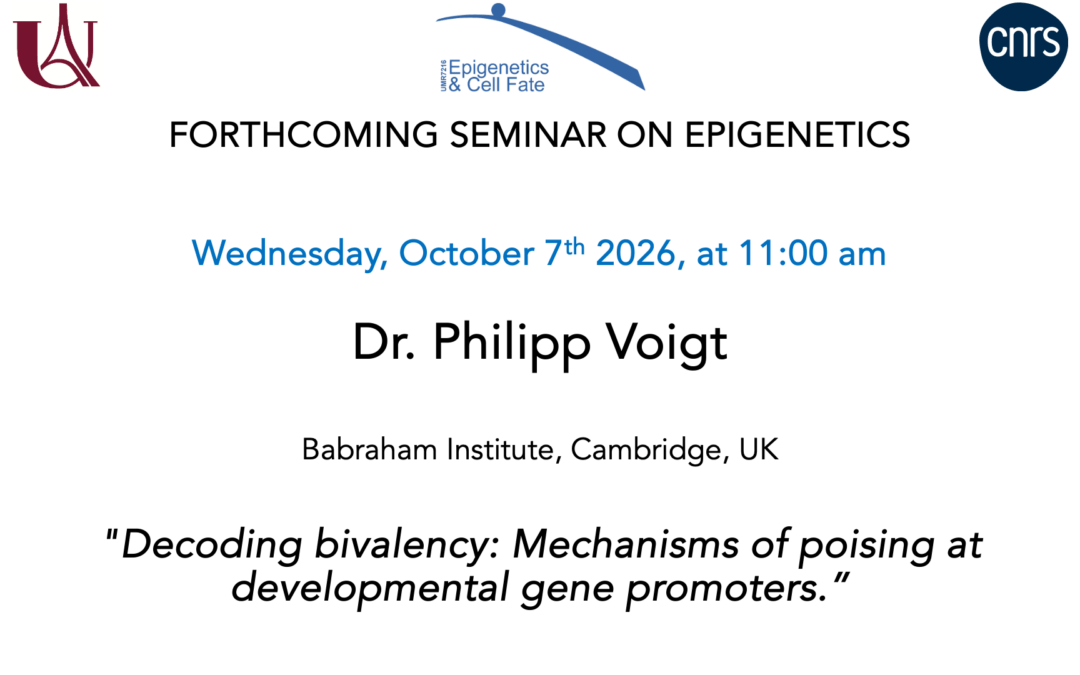
Seminar Philipp Voigt –October 7, 2026
Dr. Philipp Voigt Babraham Institute, Cambridge, UK "Decoding bivalency: Mechanisms of poising at developmental gene promoters." The seminar will take place in the Institut Jacques Monod seminar room (RB-18B).Bâtiment Buffon, 15 rue Hélène Brion, Paris 13th. On...
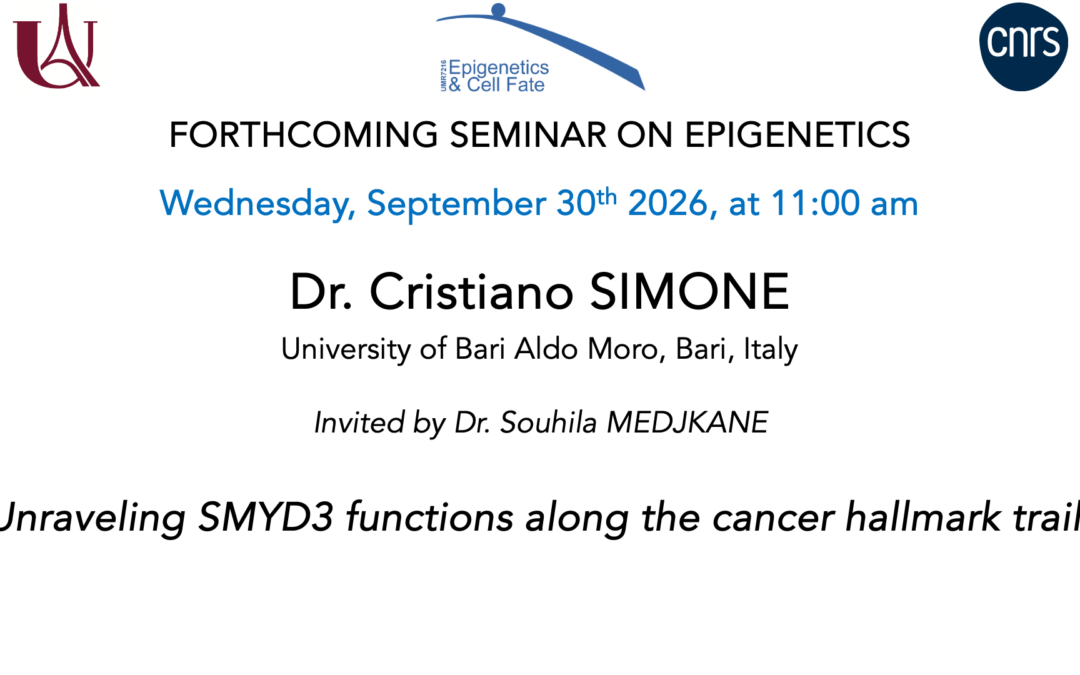
Seminar Cristiano SIMONE –September 30, 2026
Dr. Cristiano SIMONE University of Bari Aldo Moro, Bari, ItalyInvited by Dr. Souhila MEDJKANE "Unraveling SMYD3 functions along the Cancer Hallmark trail." The seminar will take place in the Institut Jacques Monod seminar room (RB-18B).Bâtiment Buffon, 15 rue Hélène...

Seminar Charles Williams –September 23, 2026
Dr. Charles Williams MRC Centre for Regenerative Medicine, The University of Edinburgh Invited by Dr. Dounia DJEGHLOUL "Mitotic bookmarking and chromatin regulation: from neural stem cell identity to brain tumour dependency." The seminar will take place in the...