

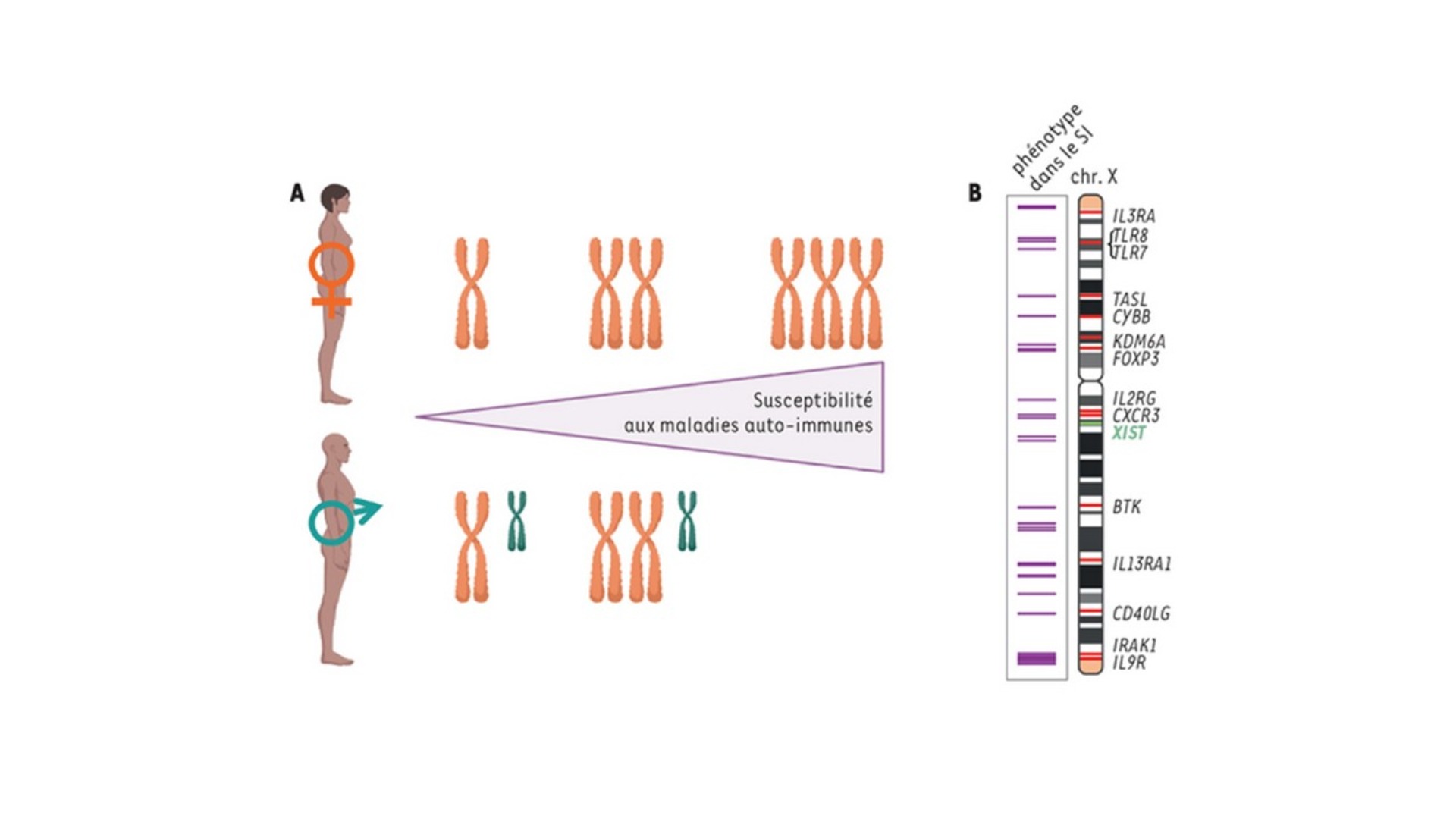
What if the presence of two X chromosomes confers functional specificities on female cells and contributes to the different susceptibilites of men and women to certain diseases? One of the X chromosomes is randomly silenced in each female cell from the embryonic stage, theoretically making the sexes equal. This silencing of the X chromosome is a unique epigenetic process, affecting an entire chromosome and resulting in mosaic expression of X-linked genes throughout the body. However, some genes escape this process and X-inactivation appears to be somewhat labile in certain cell types. What are the physiological implications of these observations? This question is beginning to be explored, particularly in the immune and nervous systems, where several pathologies have sexual bias.
https://www.medecinesciences.org/fr/articles/medsci/full_html/2024/11/msc240158/msc240158.html
Medecine Sciences ©
À lire aussi
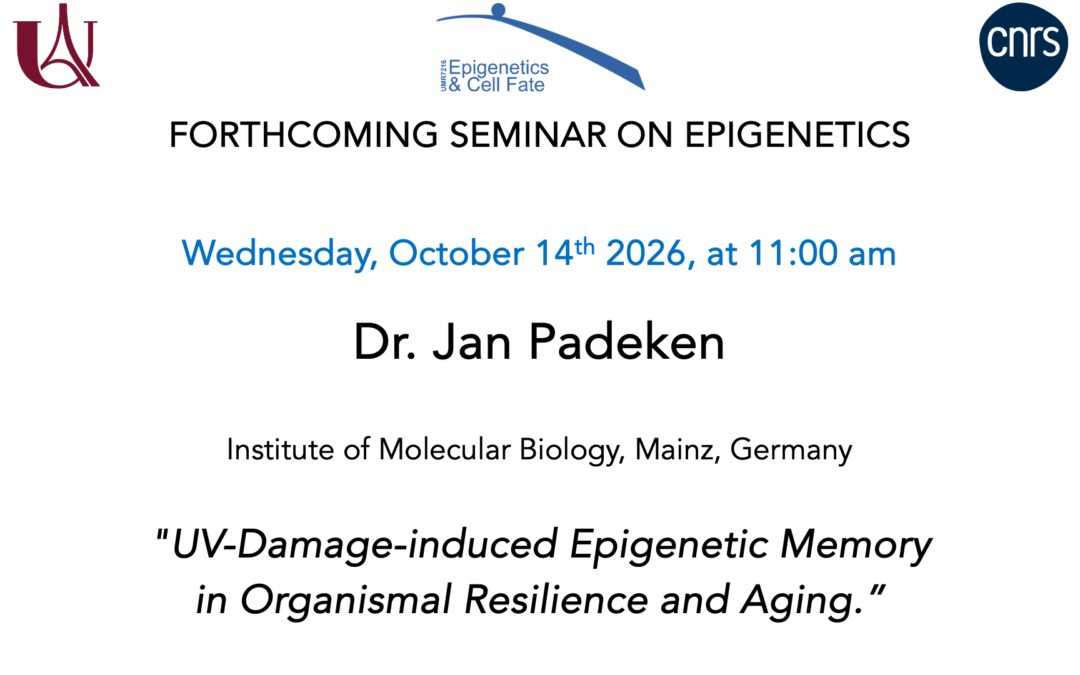
Seminar Jan Padeken –October 14, 2026
Dr. Jan Padeken Institute of Molecular Biology, Mainz, Germany "UV-Damage-induced Epigenetic Memory in Organismal Resilience and Aging." The seminar will take place in the Institut Jacques Monod seminar room (RB-18B).Bâtiment Buffon, 15 rue Hélène Brion, Paris 13th....
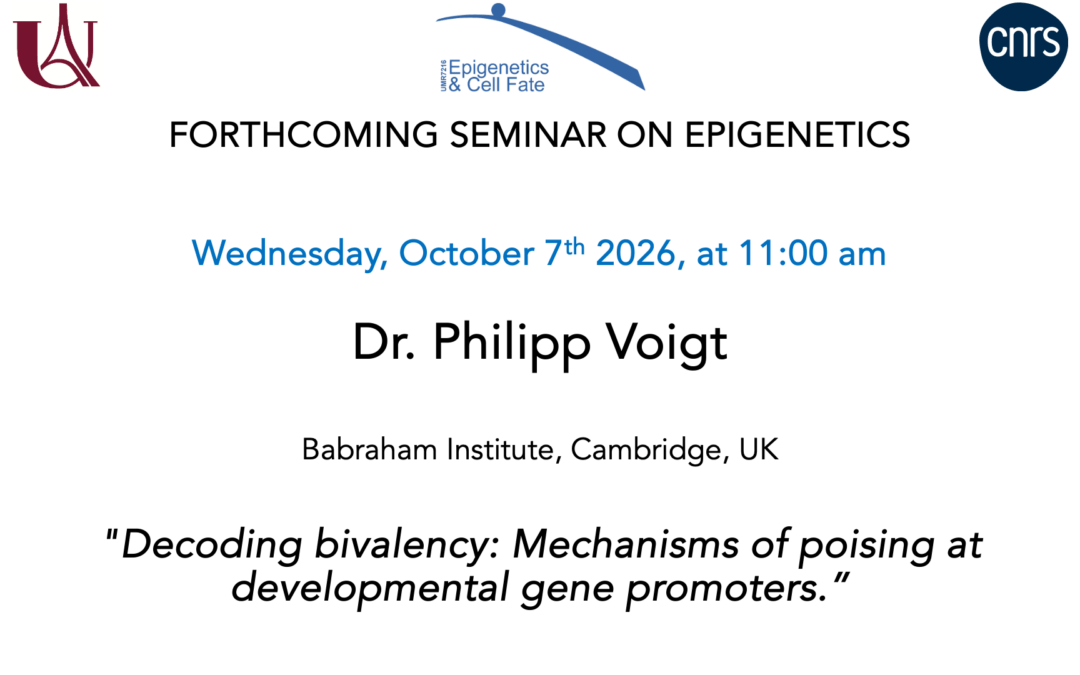
Seminar Philipp Voigt –October 7, 2026
Dr. Philipp Voigt Babraham Institute, Cambridge, UK "Decoding bivalency: Mechanisms of poising at developmental gene promoters." The seminar will take place in the Institut Jacques Monod seminar room (RB-18B).Bâtiment Buffon, 15 rue Hélène Brion, Paris 13th. On...

Congratulations to Dr. Silvia Comunian!
On September 25, 2026, Silvia successfully defended her thesis: “Epigenetic control of nuclear mechanics and migration via H3K9 methylation at Lamina-Associated Domains in lung cancer cells”Silvia Comunian and the jury members: Yegor Vassetzky, Nicolas Borghi,...
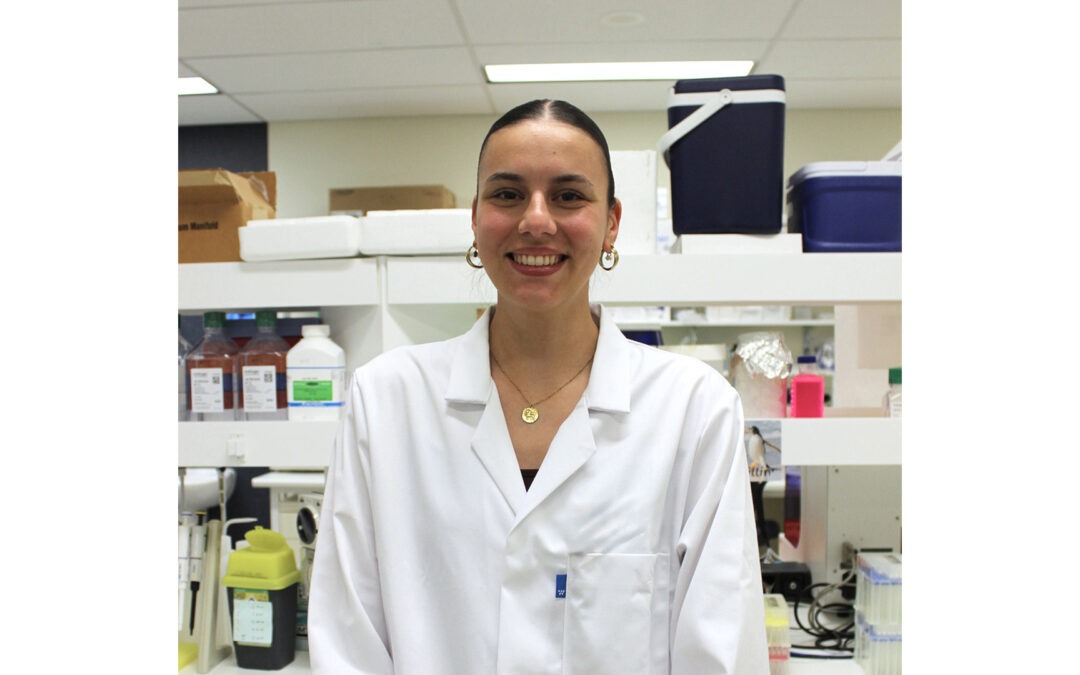
Welcome to Sara
Sara is joining the team for a master’s internship. As a student in the Interdisciplinary Master’s in Life Sciences program at the Ecole Normale Superieure, Sara will contribute to a research project aimed at identifying vulnerabilities in DNA repair in high-grade...